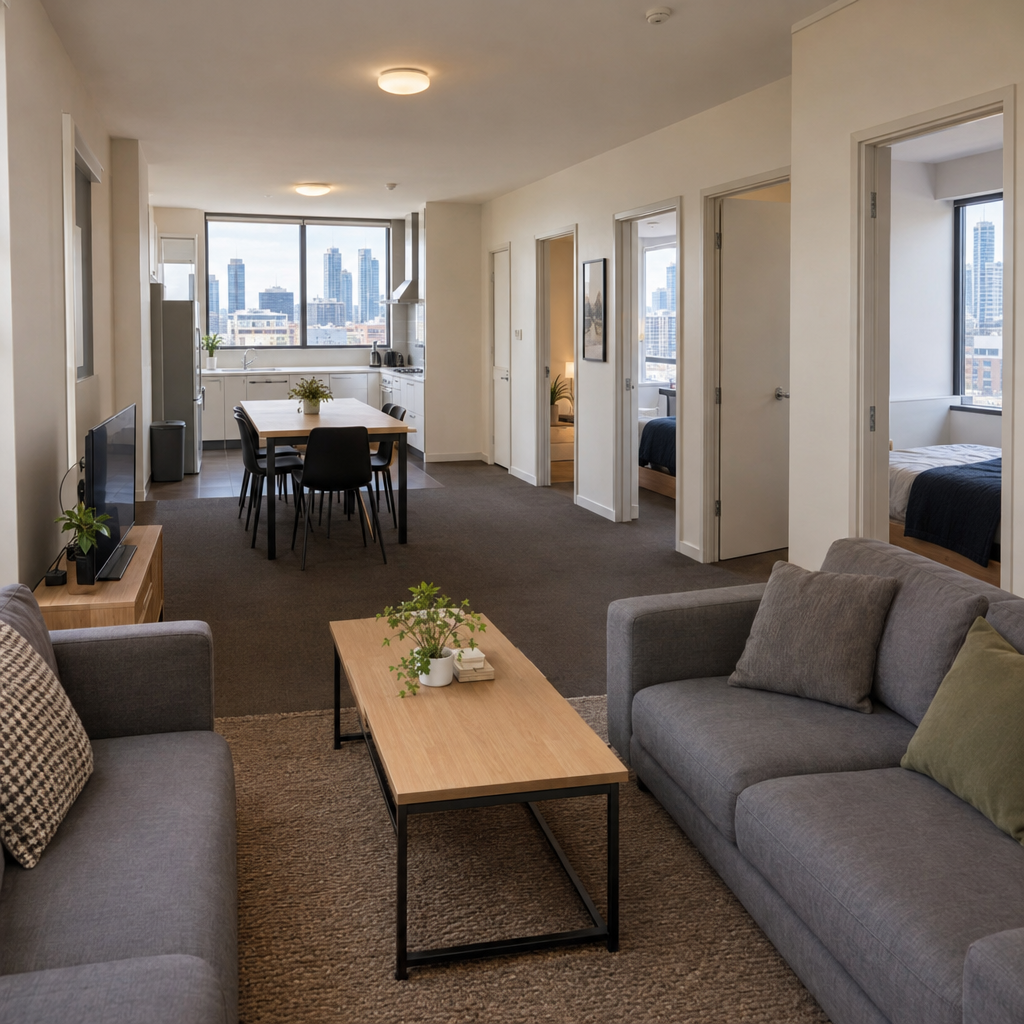
A rooming house investment in Melbourne CBD can offer strong income potential where there is sustained demand for well-located, well-managed furnished rooms. However, the CBD is not automatically the right location for every investor. Higher acquisition costs, apartment-heavy stock, owners corporation restrictions, building suitability, planning considerations and operational complexity can materially affect whether a property is viable.
The most important question is not whether rooms rent well in the CBD. It is whether a specific property can be lawfully configured, safely operated, competitively positioned and profitably held after finance, furnishing, management, maintenance, utilities, vacancy and compliance-related costs are considered.
For investors considering the inner city, the best starting point is a property-specific feasibility review rather than a broad rental-yield calculation. Jabel Property’s rooming house pre-investment check is designed to help investors assess key risks before committing to a purchase.
Why Melbourne CBD attracts rooming house investors
Melbourne CBD has a broad mix of potential room renters, including students, new arrivals, hospitality and service workers, healthcare workers, contract staff and people seeking flexible access to employment, education, transport and city amenities. This depth of demand can make central locations appealing for a furnished rooming house model.
Location alone does not create a successful rooming house. Tenants compare room size, privacy, shared facilities, furnishing quality, cleanliness, building security, access to transport and the overall standard of management. In a competitive inner-city market, a poorly presented or inconveniently configured property can struggle even when it is close to major amenities.
For an investor, the CBD proposition is often about convenience and tenant appeal rather than chasing the highest advertised weekly room rate. A well-run property may benefit from proximity to jobs, universities, tram routes, rail stations, supermarkets and services, but those advantages need to outweigh the higher cost base and constraints that can come with central-city stock.
The CBD property types that require the closest scrutiny
Melbourne CBD is dominated by apartments, towers, mixed-use buildings and commercial premises. That makes due diligence especially important. A property may look suitable for multiple occupants on a listing, yet still be unsuitable for a rooming house because of title restrictions, building rules, layout limitations, fire and life-safety requirements, access constraints or approval pathways.
Before progressing beyond an initial inspection, investors should consider the following questions:
Is the property type appropriate for the intended rooming house use?
Does the owners corporation have rules that may affect leasing, occupancy, alterations or the proposed use?
Can the layout provide genuinely usable bedrooms and shared living spaces?
Are bathrooms, kitchens, ventilation, natural light, storage and laundry facilities sufficient for the likely resident profile?
Could required upgrades be practical within the building and financially sensible?
Are there access, lift, stair, fire safety or emergency egress issues that need professional assessment?
Will the property remain attractive after allowing for noise, street activity, limited outdoor space or small room dimensions?
Older low-rise buildings, terraces near the CBD fringe and properties in inner-city residential pockets may offer different conversion opportunities from high-rise apartments. Each has its own trade-offs. A larger older property may have more adaptable space but require substantial improvement works. An apartment may be easier to furnish and present but more constrained by building design, owners corporation rules and shared infrastructure.
Investors should not assume that an existing multi-bedroom layout, an advertised “student accommodation” history or a large number of occupants means a property can operate as a rooming house. Requirements and responsibilities depend on the property, current Victorian rules, the relevant local authority and the intended operating model.
Gross room income is not the same as investment return
The appeal of rooming house investment is often based on the ability to receive income from individual rooms rather than a single whole-property tenancy. In Melbourne CBD, that gross income can appear compelling when room rents are added together. But gross room income is only the top line.
A realistic investment assessment should separate gross yield from net return. Gross yield broadly compares annual room income with the purchase price or total project cost. Net return considers the costs required to own and operate the property. Those costs can be substantial in a furnished, high-turnover accommodation model.
Potential costs to model include:
Purchase costs, finance costs and holding costs during setup
Conversion works, repairs, furniture, appliances and room fitout
Owners corporation fees where applicable
Council rates, water charges, insurance and utilities
Internet, consumables, cleaning and common-area upkeep
Leasing, management, inspections and tenant turnover
Maintenance, replacement furniture and contingency allowances
Vacancy, unpaid rent and periods between occupancies
Professional advice, registrations, approvals or compliance-related work where required
The useful question is: what does the property produce after realistic operating expenses and conservative vacancy assumptions? Investors should test more than one scenario, including lower room rates, slower lease-up, unexpected repairs and increased utility costs. A project that only works under optimistic assumptions deserves further scrutiny.
CBD demand requires a clear tenant proposition
A rooming house should be positioned for a defined tenant market rather than simply advertised as rooms in the city. Melbourne CBD residents may prioritise different features depending on their reason for renting. A student may value proximity to campus and inclusive utilities. A full-time worker may place greater value on a quiet room, reliable internet, secure access, storage and a well-maintained shared kitchen.
Investors should assess nearby competing room listings and ask what will make their property a credible choice. This is not just a pricing exercise. It is a product and operations decision.
Useful points of comparison include room dimensions, furnishings, private versus shared facilities, inclusions, building presentation, cleaning standards, accessibility to public transport, lease flexibility and the quality of listing photography. Jabel’s rent-or-rent research resources can help investors think more carefully about local room-rental demand and competitive positioning.
In a CBD setting, presentation can directly affect leasing performance. Functional furniture, durable finishes, adequate storage and a coherent common-area layout help a property compete without relying solely on low pricing. Explore Jabel’s rooming house fitout service for practical considerations around furnishing an investment property for room-by-room renting.
Compliance and building suitability should be assessed before exchange
Rooming houses involve operational and safety responsibilities that are different from standard residential leasing. In Victoria, requirements may relate to registration, minimum standards, building and fire safety, resident amenity, management practices and other matters. The applicable obligations can change and may vary according to the property, use, occupancy arrangement and local circumstances.
For CBD properties, building constraints can be particularly important. Works that may be straightforward in a detached house can be more difficult in a strata or high-rise environment. Access for trades, approvals from relevant parties, service connections, fire systems and the practical ability to alter layouts should all be considered before relying on a conversion budget.
Investors should seek current advice from appropriately qualified building, planning, legal, fire safety, compliance and financial professionals as relevant to the property. A rooming house compliance audit can also help identify operational considerations once a property is being evaluated or prepared for use. No audit or preliminary assessment should be treated as a substitute for any approval, certification or professional advice that may be required.
When the Melbourne CBD may not be the best rooming house location
The CBD can be attractive, but it is not always the most practical entry point for a rooming house investor. A property may be less suitable when its purchase price leaves too little margin after operating costs, when strata restrictions limit the intended use, when rooms are too small to offer a compelling tenant experience or when upgrade requirements make the project difficult to fund.
Investors may find more adaptable stock in selected inner suburbs or established residential areas near employment, education and transport. The right location depends on the investor’s budget, appetite for renovation, management approach, desired tenant market and ability to hold the property through variable conditions.
Rather than treating the CBD as a standalone strategy, compare it against other areas using the same criteria: total project cost, legal and physical suitability, room-rental evidence, likely operating costs, competition, transport access and downside resilience. Jabel’s Melbourne rooming house investor guide provides a broader starting point for understanding the investment model.
Frequently asked questions about rooming house investment in Melbourne CBD
Is a CBD apartment suitable for a rooming house?
It may be, but suitability cannot be assumed from the number of bedrooms or the property’s location. Investors should review the layout, building services, owners corporation rules, title documents, access, safety requirements and any applicable regulatory obligations. Obtain current professional advice before purchasing or changing the use of a property.
Are rooming house returns in Melbourne CBD higher than a standard rental?
Potential gross income may be higher where individual rooms can be rented at viable rates, but this does not automatically mean a higher net return. Rooming houses can involve greater setup, furnishing, management, cleaning, utility, maintenance and vacancy costs. Compare net operating performance using conservative assumptions rather than relying on total advertised room rent.
What should I check before buying a CBD rooming house property?
Start with property suitability, likely room configuration, competing room supply, tenant demand, owners corporation restrictions, estimated conversion costs, operating expenses and the current compliance pathway. A pre-purchase assessment can help identify issues before they become costly commitments.
A considered approach to Melbourne CBD rooming house investment
Melbourne CBD can suit investors seeking a centrally located rooming house opportunity, but it rewards careful selection rather than broad assumptions. The strongest investment decisions are built around a specific property, a realistic operating budget, a defined tenant proposition and early investigation of building and compliance considerations.
If you are considering a CBD property or comparing it with another Melbourne location, book a 30-minute discovery call with Jabel Property to discuss your investment objectives and the practical questions to investigate before moving forward.
General information disclaimer: This article provides general information only and is not legal, financial, tax, planning, building, fire safety or property-specific advice. Rooming house requirements, approvals and investment outcomes depend on current laws, property circumstances, relevant authorities and market conditions. Seek advice from appropriately qualified professionals before making an investment or property-use decision.