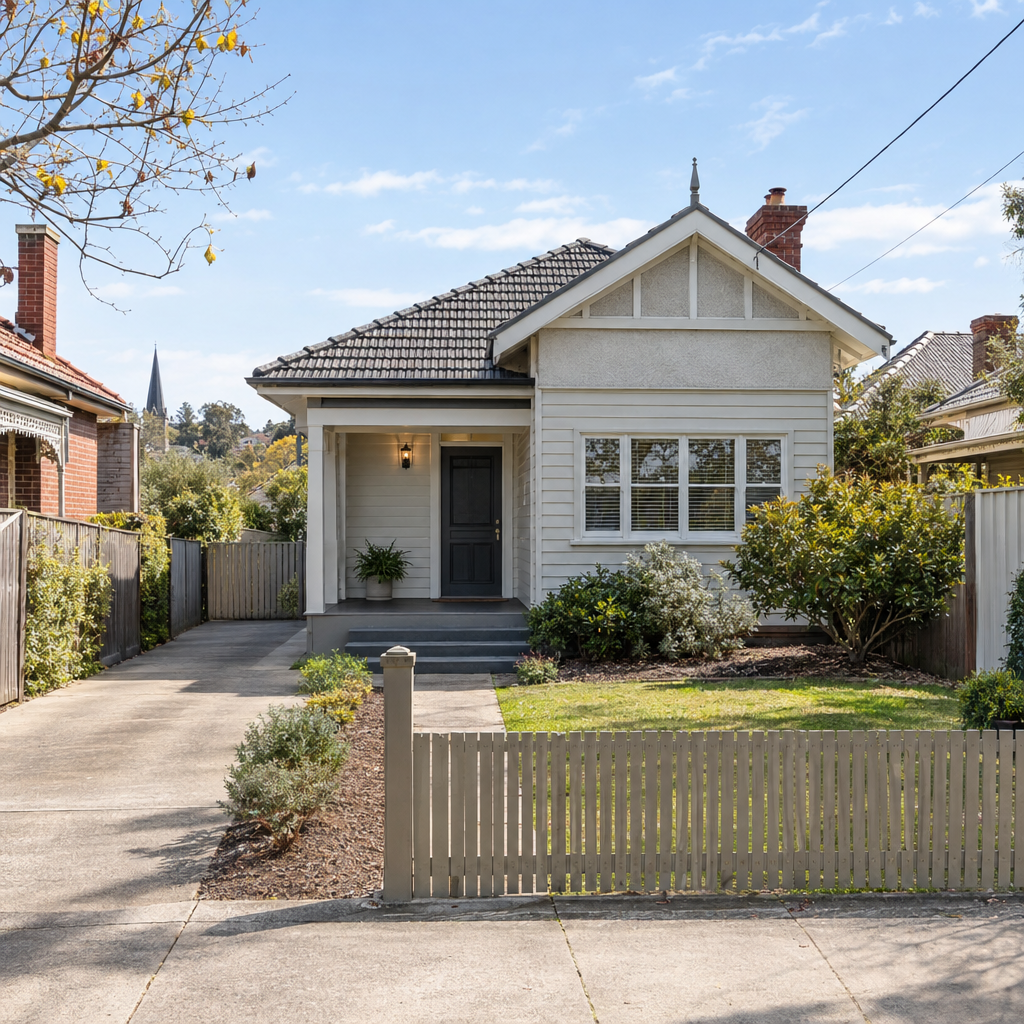
A sound rooming house investment strategy starts with a simple principle: assess the property, approval pathway, conversion cost and operating model together before relying on a projected rental figure. The strongest opportunities are not necessarily the properties with the most potential bedrooms. They are the ones where the purchase price, layout, location, compliance requirements, furnishing scope, ongoing costs and realistic room income can work as a complete investment case.
For Melbourne investors, rooming houses can offer a different income model to a conventional residential tenancy because rent is received room by room rather than from one household. That can improve gross income potential, but it also creates additional operational responsibilities, higher turnover exposure, greater furnishing needs and more detailed safety, maintenance and management requirements. The strategy must therefore be based on net return, risk tolerance and execution capability—not gross rent alone.
This guide outlines a practical framework for evaluating rooming house opportunities. For a broader introduction to the investment model, read Jabel Property’s Melbourne rooming house investor guide.
Start with the investment outcome you are trying to create
Before searching for a property, define what a successful investment needs to achieve. A rooming house strategy may be appropriate for an investor seeking higher income diversification from a single property asset, but it is not automatically suitable for every budget, location or risk profile.
Your initial brief should identify:
Your maximum acquisition budget, including purchase costs and a realistic contingency.
Whether you are considering an existing rooming house, a property suitable for conversion or a development-oriented opportunity.
Your preferred ownership and debt structure, to be discussed with qualified financial, tax and lending advisers.
The level of renovation, construction and approval risk you are prepared to manage.
Your target net cash flow after operating expenses, rather than a headline gross yield.
Whether you intend to appoint specialist management or take on some operational responsibilities yourself.
This brief helps prevent a common mistake: finding a property with an appealing floorplan and then trying to make the numbers fit. A more disciplined approach is to establish investment parameters first, then reject properties that cannot meet them under conservative assumptions.
Choose the right pathway: established asset, conversion or higher-risk project
There is no single rooming house investment strategy. The appropriate pathway depends on your capital, timing, appetite for complexity and ability to absorb variations in cost or income.
An established rooming house may offer a more immediate operating history, but investors still need to verify the condition of the building, current agreements, rent collection, maintenance history, furnishings, safety measures, registrations and any approvals relevant to the use. Existing income should be investigated rather than accepted at face value. A fully occupied property today may still have deferred maintenance, below-market or above-market rents, upcoming expenditure or management issues that affect future performance.
A conversion opportunity can provide greater control over design, room mix and operational setup. However, the investor takes on feasibility, design, construction, furnishing and commencement risk. The property must be assessed for its practical suitability before purchase, not after settlement. Jabel Property’s rooming house pre-investment check is designed to help investors investigate a prospective property before committing to a pathway.
A more substantial redevelopment or major alteration may create additional scope, but it can also introduce a longer timeframe, planning uncertainty, more complex construction considerations and a larger capital requirement. It should be evaluated as a development-style project, not simply as a high-yield residential purchase.
Test the property before you fall in love with the floorplan
A property may appear large enough for rooming house use but still be commercially or practically unsuitable. Room count is only one part of the assessment. Usable bedroom dimensions, natural light, circulation, bathrooms, kitchen capacity, laundry access, storage, outdoor areas, parking expectations and access all influence the final operating model.
Look closely at the features that affect both resident experience and conversion cost:
Whether bedrooms can be created or retained without producing awkward, undersized or poorly located spaces.
How many bathrooms and toilets are available, their condition and whether the layout supports the anticipated resident mix.
The kitchen’s capacity for shared use, including bench space, appliances, storage and durability.
Entry, hallway and common-area circulation, particularly where several unrelated residents will use the home.
Electrical, plumbing, heating, hot water and ventilation capacity.
Whether fire safety works, building upgrades or accessibility considerations may be required.
The likely extent of cosmetic work versus structural or services upgrades.
How the property relates to transport, employment, education, shopping and local amenities.
Location should be evaluated through the lens of resident demand, not only capital-growth narratives. Different locations may attract different resident profiles, rental expectations and turnover patterns. Research comparable rooms carefully, but remember that online asking rents are not proof of achieved rent, occupancy or net income. Jabel Property’s rent and renter research can help investors build a more grounded view of local room demand and pricing.
Build a feasibility model around net return, not gross rent
Gross room income is calculated by multiplying expected weekly rent per room by the number of rooms, then annualising the result. It is useful as an initial screening measure, but it is not the investment return.
Net return is what remains after relevant operating costs, financing costs and periodic capital expenditure. Depending on the property and operating model, these may include utilities, internet, cleaning, gardening, repairs, insurance, council rates, water charges, management fees, vacancy allowance, reletting costs, consumables, compliance-related costs, furnishings replacement and maintenance reserves.
A sensible feasibility should include at least three scenarios:
Base case: a realistic estimate of room rents, occupancy and operating costs.
Conservative case: lower occupancy, longer vacancy between residents, higher expenses or delayed commencement.
Pressure case: a combination of higher conversion costs, lower income and unexpected repair or compliance expenditure.
Conversion budgets should separate purchase costs, design and professional fees, building works, fire safety works where applicable, appliances, furniture, window furnishings, security, landscaping, cleaning, photography, marketing and contingency. A furnishing budget deserves particular attention. In a rooming house, furnishings are part of the income-producing asset and must be durable, functional and capable of being replaced over time.
For investors planning a conversion, Jabel Property provides rooming house conversion guidance and rooming house fitout support to help connect the property concept with the practical work required to prepare it for operation.
Do not treat approvals and compliance as a last-stage task
Rooming house use can involve requirements under Victorian residential tenancy, building, health, fire safety, planning and local government frameworks. The requirements that apply can vary according to the property, number of residents, proposed works, municipality, building classification and other circumstances. An investor should not assume that every property follows the same pathway, or that an existing arrangement has been correctly established.
Before making an unconditional commitment, seek appropriate current advice on the matters relevant to the particular property. This may involve checking planning controls, proposed-use requirements, building and fire safety obligations, local registration processes, lease or title restrictions and the scope of any building works. Qualified legal, planning, building, fire safety, financial and tax professionals can provide advice within their areas of expertise.
A compliance review is not simply a box-ticking exercise. It is part of protecting residents, preserving the asset and reducing the risk of expensive remedial work later. Jabel Property’s rooming house compliance audit can support owners who want a practical review of their existing operating position.
Design the operating model before the first room is advertised
A rooming house is an operating business as well as a property investment. The difference is most visible after launch: enquiries need to be handled, residents need to be onboarded, common areas need attention, maintenance must be coordinated and room availability needs to be managed professionally.
Decide early how the property will be run. Your management approach should cover resident enquiry handling, inspections, agreements, rent collection, maintenance reporting, cleaning schedules, utilities, house expectations, incident response and vacancy marketing. A clear operating model can help protect the property, support a better resident experience and provide more realistic data for your financial projections.
Specialist management may be worth considering where the investor wants less day-to-day involvement or lacks experience in shared accommodation operations. Learn more about Jabel Property’s rooming house management in Melbourne and leasing partnership options.
Make the purchase decision using a clear go, revise or walk-away framework
Before proceeding, summarise the opportunity on one page. The purpose is not to make the project look attractive; it is to make the decision easier to challenge.
Go: The property remains viable under conservative assumptions, due diligence has identified a workable pathway and you have sufficient funds for the full project scope and contingency.
Revise: The concept may work, but only after renegotiating the purchase price, reducing the scope, changing the room mix or obtaining further professional advice.
Walk away: The project depends on optimistic rents, maximum occupancy, uncertain approvals, a minimal contingency or an operating model you are not equipped to manage.
The best rooming house investment decisions are often the opportunities an investor chooses not to pursue. Discipline at acquisition can be more valuable than trying to solve an unsuitable property after settlement.
Frequently asked questions about rooming house investment strategy
Is a high gross yield enough to justify a rooming house investment?
No. Gross yield does not account for vacancy, utilities, management, maintenance, furnishing replacement, compliance-related expenses, finance costs or conversion expenditure. Compare opportunities using a detailed net-income model and test whether the investment remains workable when assumptions become less favourable.
How many rooms should a rooming house have?
The right number depends on the property’s layout, resident amenity, applicable requirements, operating capacity and commercial viability. Adding rooms may increase potential gross income, but it can also increase conversion cost, management complexity and pressure on shared facilities. The aim is a functional, sustainable room mix rather than the highest possible count.
Should I buy an existing rooming house or convert a house myself?
An existing property may offer an established setup, while a conversion can provide more control over the finished product. Neither option is automatically lower risk. Existing properties require verification of their condition and operating position; conversions require robust due diligence, budgeting and project execution. Your decision should reflect your available capital, timeframe and appetite for complexity.
A practical next step for Melbourne investors
A rooming house investment strategy works best when the property decision, conversion scope, income assumptions and operating plan are considered as one model. Begin with a realistic brief, investigate the property thoroughly, allow for contingency and obtain appropriate professional advice before making commitments.
If you are considering a Melbourne rooming house purchase, conversion or operational review, book a 30-minute discovery call with Jabel Property to discuss your starting point and the questions worth resolving first.
General information disclaimer: This article is general information only and is not legal, financial, tax, planning, building, fire safety or property-specific advice. Requirements and investment outcomes depend on the individual property, current rules, market conditions and operating circumstances. Obtain advice from appropriately qualified professionals before making an investment decision.