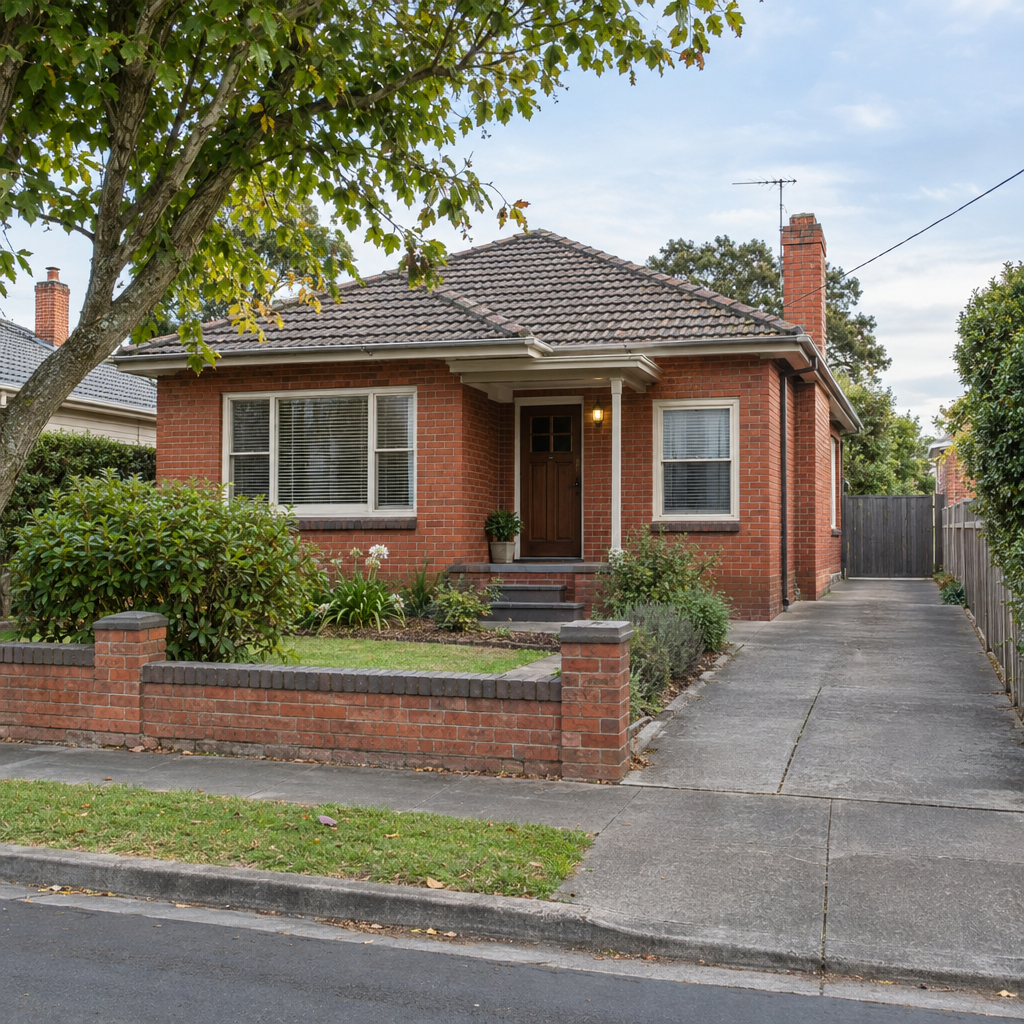
A rooming house investment in Brunswick can suit investors looking for a higher-income residential strategy in Melbourne’s inner north, but the opportunity depends far more on the individual property, conversion pathway, operating model and local renter demand than on the suburb name alone.
Brunswick has a mix of established housing, transport connections, employment access, education links and inner-city amenities that may support demand for well-presented rooms. However, not every house is suitable for rooming house use, and a promising gross rent estimate does not automatically translate into a strong net return. The right approach is to test feasibility before committing to a purchase, not after settlement.
This guide explains the key questions investors should ask when considering a rooming house in Brunswick, from site selection and due diligence through to fitout, leasing and ongoing operations.
Start With the Property, Not the Headline Yield
Rooming house investment is often discussed in terms of multiple income streams from one property. That can be attractive, particularly when compared with a conventional single-tenancy rental. Yet projected income is only one part of the investment equation.
A viable Brunswick rooming house needs to be assessed as an operating asset. The property must be capable of providing practical, comfortable and appropriately configured accommodation, while also meeting the relevant requirements that apply to its intended use. This may involve planning, building, registration, fire safety, minimum standards and other obligations, depending on the property and the proposed works.
Before relying on a room count or rental estimate, investigate:
The site’s planning controls, overlays and any relevant permit requirements.
The existing building layout, condition and potential scope of works.
Whether room sizes, access, amenities, ventilation and communal areas can support the intended use.
The likely cost of conversion, furnishing, safety upgrades, approvals and professional advice.
Whether the location is likely to appeal to the renter profile you intend to serve.
The operational effort and management costs involved after the property is occupied.
A compact house in a strong location may still be a poor rooming house candidate if the layout creates impractical bedrooms, inadequate shared facilities or costly compliance challenges. Conversely, a property that appears less impressive at first glance may have better rooming house potential if it has sensible circulation, usable common areas and a realistic conversion pathway.
An early rooming house pre-investment check can help investors identify feasibility issues before they become expensive assumptions.
What Makes Brunswick Worth Investigating?
Brunswick is an established inner-north suburb with a broad mix of housing types, retail precincts, hospitality, public transport access and connections to nearby employment and education areas. These characteristics can make it relevant for investors researching room-by-room accommodation demand.
For rooming house investors, the important question is not simply whether Brunswick is popular. It is whether a particular address offers a practical proposition for the intended residents. Location should be assessed at the street and walking-distance level.
Useful local demand considerations include:
Access to trains, trams, buses and cycling routes.
Proximity to shops, supermarkets, healthcare, parks and daily amenities.
Connections to employment precincts, education providers and major activity centres.
The surrounding housing mix and the likely expectations of prospective renters.
Parking availability, traffic conditions and access for maintenance or cleaning teams.
The level of competing room rental supply in the immediate area.
Investors should avoid treating broad suburb reputation as evidence of room demand at a particular price point. Rental enquiry, achievable room rents, vacancy periods and renter preferences can change. Current local research is essential, especially where the feasibility model relies on premium room rates or consistently high occupancy.
Jabel Property’s rent-or-rent research service is designed to support more grounded decisions about room rental demand and operating assumptions.
Brunswick Property Types: Layout Matters More Than Character
Brunswick includes a varied built environment, from older detached homes and terraces to townhouses, apartments and newer development. For rooming house investment, the most attractive-looking property is not always the most workable one.
Older homes can offer generous room proportions and character features, but may also require substantial upgrades to services, safety measures, bathrooms, kitchens, heating, ventilation, accessibility or building condition. Newer properties may reduce some maintenance risks, yet can have constrained living spaces, limited storage, insufficient shared amenities or owners corporation considerations.
When reviewing a potential acquisition, focus on how the building will function after conversion:
Can residents move through the home without repeatedly crossing private rooms?
Is there a sensible balance between bedrooms, bathrooms, toilets, kitchen facilities and communal space?
Can furnishings be installed without making rooms feel overcrowded or impractical?
Is there enough storage for residents, linen, cleaning supplies and operational equipment?
Can maintenance access be managed without unnecessarily disrupting residents?
Will the property remain durable under higher-than-standard residential use?
Good design supports both resident experience and operational efficiency. A poorly planned layout can contribute to avoidable wear, resident friction, cleaning complexity and weaker leasing appeal.
Investors considering physical changes should obtain appropriate advice for the property, including from relevant building, planning, fire safety and other qualified professionals. Requirements are property-specific and should be checked against current Victorian rules and the relevant authorities.
Model Gross Income Separately From Net Return
One of the most important disciplines in rooming house investment is separating gross income from net return.
Gross income is the total rent that may be collected if rooms are occupied at the assumed weekly rate. It is useful for comparing scenarios, but it is not the investor’s return. A gross figure may look compelling while still producing a modest result once operating costs, vacancy and capital expenditure are included.
A more complete feasibility model should consider:
Expected room rents based on current market evidence, not optimistic listings alone.
Allowances for vacancy, turnover and arrears.
Utilities, internet, cleaning, gardening and consumables where provided.
Property management or rooming house management costs.
Maintenance, repairs, replacement furniture and periodic refresh costs.
Insurance, council rates, land tax where applicable and finance costs.
Registration, compliance, inspection, professional and administrative expenses where relevant.
Initial conversion, furnishing and contingency costs.
It is also sensible to test the numbers under less favourable conditions. What happens if one or two rooms are vacant? What if room rents need to be reduced to secure suitable residents? What if an unexpected repair is required in the first year? A rooming house investment should remain understandable and manageable under realistic operating pressure, not only in a best-case spreadsheet.
Conversion and Fitout Should Support Long-Term Operations
Conversion works and furniture selection are often treated as a final stage after purchase. In practice, they should be part of the acquisition decision. The cost and quality of the conversion can materially affect leasing, resident retention, maintenance and compliance readiness.
A thoughtful rooming house fitout considers more than beds and desks. It considers durable finishes, practical storage, shared-space functionality, lighting, appliances, privacy, cleaning access and furniture that suits the dimensions of each room.
Underinvesting may make rooms harder to lease or more expensive to maintain. Overcapitalising without a corresponding rental or operational benefit can weaken the overall investment case. The aim is a fitout that is appropriate for the local market and sustainable for the property’s intended use.
Learn more about rooming house conversion planning and rooming house fitouts that are designed around practical operation rather than generic furnishing packages.
Management Is Part of the Investment, Not an Add-On
A Brunswick rooming house needs active oversight. There are multiple residents, shared areas, regular turnover points and a greater need for consistent communication than in a conventional tenancy arrangement.
Management considerations can include advertising, applicant screening, resident onboarding, rent collection, maintenance coordination, cleaning, shared-area presentation, issue resolution and record keeping. The right management approach will depend on the property, the resident mix and the owner’s level of involvement.
Investors should decide early whether they have the time, experience and systems to self-manage, or whether specialist support is more appropriate. A lower management fee is not necessarily a lower-cost outcome if poor communication, weak presentation, delayed repairs or inconsistent resident processes lead to higher vacancy and turnover.
For owners seeking specialist operational support, explore rooming house management in Melbourne.
Questions to Ask Before Making an Offer
Before committing to a Brunswick property, an investor should be able to answer the following questions with evidence rather than assumptions:
What is the intended resident profile, and what current rental evidence supports the proposed room rates?
Is the building layout workable for rooming house accommodation after allowing for required facilities and shared spaces?
What approvals, registrations, reports or upgrades may be required for this specific property?
What is the realistic all-in cost to acquire, convert, furnish and launch the property?
What does the net operating position look like after conservative vacancy and expense allowances?
Who will manage leasing, residents, cleaning, maintenance and compliance-related tasks?
What is the fallback plan if the proposed rooming house use is not feasible or does not perform as expected?
If the answers remain uncertain, it may be better to pause than to let urgency drive the purchase. Strong rooming house investments are generally built on disciplined due diligence, not on a room count alone.
Frequently Asked Questions
Is Brunswick a good suburb for rooming house investment?
Brunswick may be worth investigating because of its inner-north location, amenities and transport connections, but suitability depends on the individual property, local room rental demand, conversion costs and operational feasibility. A suburb-level view should be followed by address-specific research.
Do I need approval to operate a rooming house in Brunswick?
Requirements can vary according to the property, proposed use, building works, planning controls and current Victorian regulations. Investors should obtain current advice from the relevant council, regulatory bodies and appropriately qualified planning, building, fire safety and legal professionals before proceeding.
How many rooms should a Brunswick rooming house have?
There is no universal ideal number. The appropriate configuration depends on the building layout, facilities, regulatory requirements, conversion budget, renter demand and management capacity. More rooms may increase gross income potential, but they can also increase costs, complexity and operational risk.
Take the Next Step With a Brunswick Feasibility Conversation
Rooming house investment in Brunswick can be a considered strategy for investors who assess the property, numbers and operating model with care. The strongest opportunities are usually those where location, layout, conversion scope, resident appeal and management plan all work together.
Book a 30-minute discovery call with Jabel Property to discuss your Brunswick property search, an existing asset or a potential rooming house conversion.
General information disclaimer: This article is general information only and is not legal, financial, tax, planning, building or property-specific advice. Rooming house requirements, approvals, costs and returns depend on current rules, individual property circumstances and market conditions. Obtain independent professional advice and verify requirements with relevant authorities before making an investment decision.