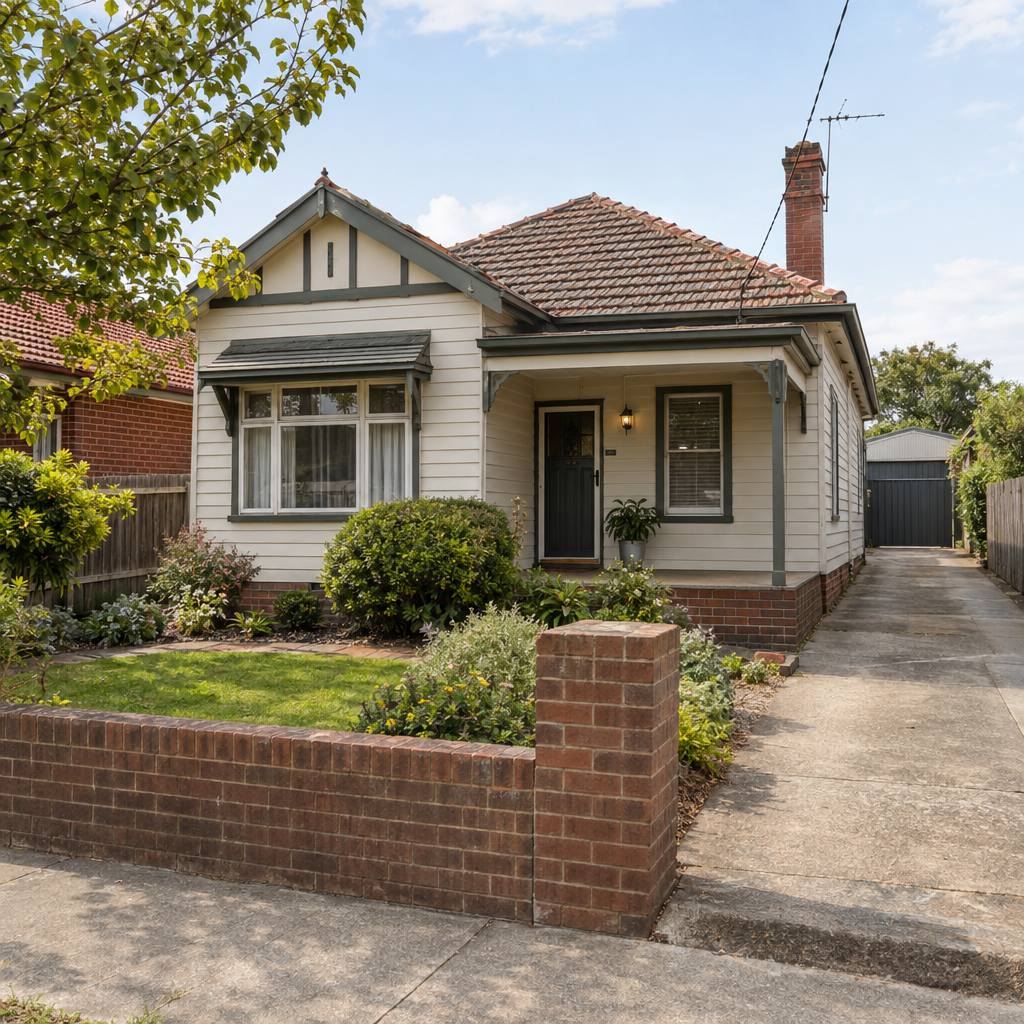
Rooming house investment in Coburg can suit investors looking to create a higher-income residential asset in Melbourne’s inner north, but the opportunity depends far more on the individual property, conversion pathway, operating model and local rental demand than on a suburb name alone. The right Coburg property may have the layout, access, services and location needed for a viable rooming house. The wrong one can become expensive to alter, difficult to approve or challenging to operate.
Before buying, investors should assess whether a property can support a safe, well-furnished and professionally managed rooming house while still producing an acceptable net return after finance, conversion, furnishing, compliance, maintenance, management and vacancy costs. A high projected gross yield is not enough.
For a broader introduction to the asset class, start with Jabel Property’s rooming houses Melbourne investor guide.
Why Coburg can be worth considering for rooming house investment
Coburg is an established inner-north Melbourne suburb with a mix of period homes, post-war housing, townhouses, apartment stock, local shopping areas, transport connections and access to employment, education and health precincts across Melbourne. For rooming house investors, this type of established location can create a broad potential tenant catchment rather than relying on a single demand source.
That does not mean every Coburg property is suitable. Older homes may offer generous room sizes and flexible layouts, but they can also bring renovation complexity, ageing services, heritage considerations, access constraints and higher upgrade costs. Newer homes may be easier to maintain but may have limited communal space, smaller bedrooms or layouts that do not translate well into a rooming house configuration.
The investment case should therefore start with the property itself. A rooming house investment is not simply a standard rental property with more bedrooms. It is an operating asset that needs to work for residents, management, cleaning, maintenance, safety obligations and long-term ownership.
The first question: can the property support the intended use?
Before making an offer on a Coburg property, investors should investigate whether the proposed rooming house use and works are feasible. Requirements can depend on the property’s planning controls, overlays, existing use, number of residents, building condition, proposed alterations and current requirements of the relevant authorities.
Planning permission, building approvals, registrations and safety-related requirements are not identical for every property or proposal. Some projects may require further approvals or specialist reports, while others may have a different pathway. Investors should not assume that a large house can automatically become a rooming house, or that a previous rental use establishes suitability for a different operating model.
A structured rooming house pre-investment check can help investors identify major feasibility issues before they commit to a purchase. Early investigation is generally less costly than discovering fundamental constraints after settlement.
Key areas to review include:
The property’s current layout, bedroom sizes and potential shared living areas.
Access, entry arrangements, paths of travel and practical resident circulation.
Bathroom, laundry and kitchen capacity for the intended number of residents.
Electrical, plumbing, heating, hot water and ventilation condition and capacity.
Fire safety considerations and the scope of any required upgrades.
Planning controls, heritage or neighbourhood character overlays where applicable.
Car parking, waste storage, outdoor areas and neighbour interface.
The likely scale, cost and disruption of conversion works.
What makes a Coburg property more practical to convert?
The most suitable rooming house properties are often those that require thoughtful improvement rather than complete reinvention. Investors should look beyond the advertised bedroom count and consider how residents and managers will use the building every day.
A practical property may have clearly defined private rooms, sufficient bathrooms, a usable communal kitchen and living area, reasonable natural light and durable circulation spaces. It should also have enough flexibility to improve privacy, storage, security and resident amenity without creating an awkward or overcapitalised outcome.
Conversely, a cheap property can be a poor acquisition if it needs extensive structural work, substantial services upgrades, complex access changes or a conversion budget that removes the expected return advantage. The purchase price is only one line in the feasibility.
Investors should also be cautious of layouts that appear to maximise room numbers at the expense of resident experience. Poorly planned rooms, insufficient bathrooms, cramped kitchens and limited common areas may affect leasing appeal, retention, maintenance and the property’s long-term reputation. The aim is not simply to fit more people into a dwelling; it is to create an asset that can be operated responsibly.
Where conversion is appropriate, Jabel Property’s rooming house conversion service provides further information on the considerations involved in adapting a property for rooming house use.
Do the numbers work after operating costs?
Rooming house investment is often assessed through gross income because individual room rents can produce a larger headline figure than a conventional lease. Gross yield can be useful as a starting comparison, but it is not the return an owner keeps.
Net return should account for the full operating picture. Depending on the property and management model, this may include finance costs, rates, insurance, utilities, internet, cleaning, gardening, consumables, repairs, compliance-related expenses, property management, leasing costs, vacancy, bad debt allowances and periodic replacement of furniture and appliances.
Furniture is particularly relevant. In many rooming house settings, furnishing quality affects the tenant experience, durability and ongoing maintenance profile. A low-cost fit-out may appear attractive at the outset but create more replacement, repair and presentation work later. Investors can explore practical furnishing considerations through Jabel Property’s rooming house fit-outs service.
A conservative feasibility should test more than one scenario. Consider what happens if rents are lower than expected, one or more rooms are vacant, conversion costs rise, repairs are required early or financing costs change. A project that only works under the most optimistic assumptions may not offer enough margin for a prudent investment decision.
Demand research should be room-by-room, not suburb-wide
“Coburg rental demand” is too broad a measure for a rooming house investment decision. A rooming house is leased room by room, so investors need to understand the likely resident profile, competing room supply, furnishing expectations, location preferences and achievable rents for comparable accommodation.
Potential demand may come from workers, students, people relocating to Melbourne, residents seeking flexible accommodation and tenants who value access to transport, shopping and employment. However, investors should not assume that general rental pressure automatically translates into demand for every rooming house product.
Research should compare genuinely similar offerings. Look at room size, furnishing, bathroom access, bills inclusion, shared spaces, property presentation, nearby transport and the quality of management. A well-presented room with appropriate shared facilities may appeal to a different renter than a basic room in a poorly maintained house, even when both are in the same suburb.
Jabel Property’s rent-or-rent research information can help investors think through the commercial research required before selecting an operating approach.
Operating a rooming house in Coburg is an active investment decision
Rooming houses generally require more active oversight than a conventional single-tenancy rental. There are more resident interactions, more frequent leasing activity, more shared-area wear, more cleaning coordination and a greater need for clear house rules and responsive maintenance.
For this reason, management capability should be considered before purchase, not after the property is complete. The manager needs to understand room-by-room leasing, resident communication, inspections, shared-property presentation and the practical demands of maintaining an occupied rooming house.
Professional management does not eliminate risk, but it can support a more consistent resident experience and clearer operational accountability. Investors can learn more through Jabel Property’s rooming house management in Melbourne service.
It is also sensible to budget for preventative maintenance and regular presentation. Shared kitchens, bathrooms, laundries and common areas receive heavier use than comparable spaces in a standard rental. Delaying minor repairs can affect resident satisfaction and lead to larger costs later.
Frequently asked questions about rooming house investment in Coburg
Is Coburg a good suburb for a rooming house?
Coburg may be worth investigating because of its established inner-north location and diverse housing stock, but suitability depends on the specific property, local competition, achievable room rents, conversion costs and operating assumptions. A suburb-level view should never replace property-level due diligence.
Do I need approval to operate a rooming house in Coburg?
Approval, registration, planning and building requirements can vary according to the property, proposed use, scope of works and current rules. Investors should obtain current advice from the relevant council, building surveyor and appropriately qualified planning, legal and compliance professionals before proceeding.
How many rooms should a Coburg rooming house have?
There is no single ideal number. More rooms may increase potential gross income, but they can also increase conversion costs, management complexity, shared-facility pressure and vacancy exposure. The appropriate configuration is one that is legally feasible, operationally manageable and commercially viable for the property.
Should I buy an existing rooming house or convert a house?
An existing rooming house may offer an established operating format, but it still requires careful due diligence on condition, compliance, income quality, management records and future capital needs. A conversion can allow greater control over layout and presentation, but it introduces feasibility, time and construction risk. The better option depends on the individual asset and your investment objectives.
Take the next step before committing to a Coburg property
A rooming house investment in Coburg should be assessed as a complete project: acquisition, approvals, conversion, furnishing, leasing, management, compliance awareness and ongoing maintenance. Investors who test each part of that equation before purchase are better placed to identify whether a property has genuine potential or simply an appealing headline price.
If you are considering a Coburg purchase or want to discuss the suitability of a potential rooming house investment, book a 30-minute discovery call with Jabel Property.
General information disclaimer: This article is general information only and is not legal, planning, building, financial, tax or investment advice. Requirements and outcomes depend on current laws, authority requirements, property circumstances, market conditions and professional advice. Obtain independent advice and verify all assumptions before making an investment decision.