
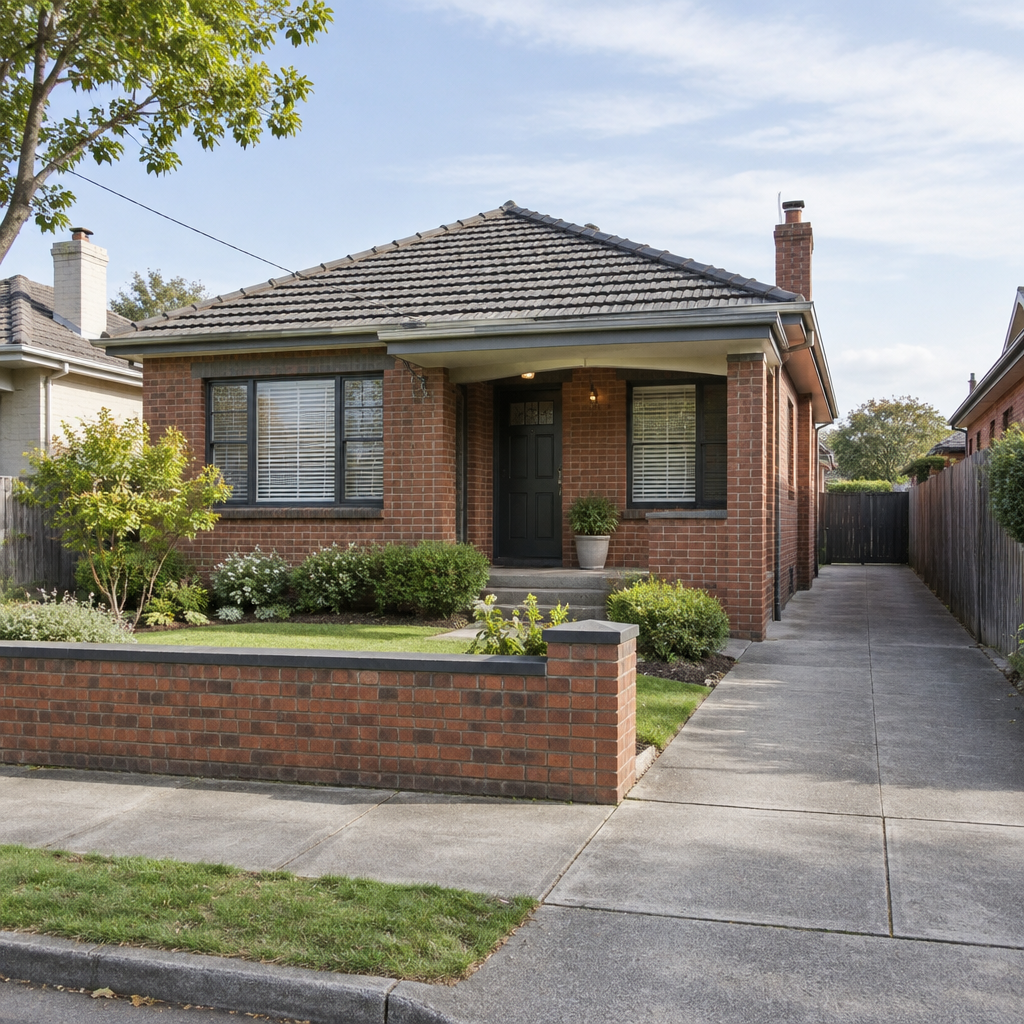
Rooming house rental yield in Melbourne can appear higher than a conventional residential investment because income is generally earned room by room rather than from one household under one lease. However, a higher gross income figure does not automatically mean a better investment. The real question is whether the property can produce a sustainable net return after acquisition, conversion, furnishing, operating, compliance, maintenance and vacancy costs are properly allowed for.
For investors, the most useful way to assess a Melbourne rooming house opportunity is to work from realistic room revenue, then stress-test expenses and operational assumptions before relying on a headline yield. A rooming house can be a strong income-focused asset when the property, location, layout and management model align. It can also underperform if projected rents, room numbers or operating costs are treated as certainties rather than assumptions to verify.
Why rooming house rental yield is different from a standard rental yield
A conventional residential property is commonly assessed on the weekly rent paid by one tenancy. A rooming house is assessed differently because multiple residents may occupy separate rooms within a shared property. This can create several income streams from one asset, but it also introduces more moving parts.
The basic gross yield calculation remains straightforward:
Gross rental yield = annual gross rent ÷ total property cost × 100
For a rooming house, annual gross rent is typically estimated by multiplying the anticipated weekly rent per room by the number of rentable rooms and by 52 weeks. That starting point is useful, but it should not be the final investment decision.
Unlike a standard rental property, rooming house income may be affected by individual room vacancy, resident turnover, included utilities, furnishing replacement, cleaning, common-area maintenance and more intensive management. As a result, two properties with the same projected gross yield can have materially different net outcomes.
The stronger question is not simply, “What yield can this property achieve?” It is, “What income is likely to remain after realistic costs, reasonable vacancy allowances and the work required to operate the property?”
Start with a defensible room-by-room revenue estimate
Revenue assumptions deserve more scrutiny than almost any other part of a rooming house feasibility assessment. It is easy to create an attractive spreadsheet by applying an optimistic weekly rent to every proposed room and assuming full occupancy throughout the year. That approach can obscure risk rather than clarify it.
Instead, assess each room individually. Consider its size, natural light, storage, furnishing standard, privacy, access to bathrooms and kitchen facilities, proximity to common areas and overall appeal compared with available alternatives. Not every room in a property will necessarily command the same rent.
Location also matters, but investors should avoid treating a desirable suburb name as proof of rental demand. Demand can vary within a suburb based on transport access, nearby employment, education precincts, hospitals, retail amenity and the type of accommodation already available. Current room listings can assist with market research, although advertised rents are not necessarily achieved rents or evidence of sustained occupancy.
Jabel Property’s rent-or-rent research service can help investors consider rooming house demand and income assumptions in the context of a particular opportunity. The purpose is not to promise a rental result, but to make the decision with better market visibility.
Estimate rent room by room rather than applying one figure across the entire property.
Check whether proposed rent includes electricity, gas, water, internet or other services.
Allow for lower-value rooms with less privacy, smaller dimensions or inferior amenity.
Compare the property with genuinely comparable rooming house and room-rental options.
Use a vacancy and turnover allowance rather than assuming every room is occupied every week.
Gross yield is a headline number; net return is the investment test
Gross yield is valuable for comparing opportunities quickly, but it excludes many costs that can materially affect a rooming house investment. Investors should calculate both gross income and a more detailed operating position before deciding whether an opportunity suits their objectives.
Net operating income = gross rental income less operating expenses
Operating expenses may include property management or rooming house management fees, utilities where included, cleaning, gardening, insurance, council rates, water charges, repairs, maintenance, consumables, internet, advertising, furnishings and replacement items. Finance costs, tax and depreciation are separate considerations that should be reviewed with appropriately qualified advisers.
It is also important to distinguish between ongoing operating costs and upfront capital expenditure. Purchase costs, legal fees, finance costs, conversion works, fire safety measures, furnishing, appliances and contingency allowances can significantly affect the total capital invested. A rooming house with a high projected income may still deliver a modest return on total funds if establishment costs are underestimated.
A practical investor model should therefore include:
Total acquisition cost, not only the property purchase price.
Conversion, furnishing and setup costs based on an appropriately detailed scope.
Expected gross room income under normal operating conditions.
A vacancy and turnover allowance.
Recurring operating expenses.
Planned and unplanned maintenance allowances.
Debt servicing assumptions, where finance is used.
A conservative scenario if rents soften, costs rise or occupancy takes longer to stabilise.
For properties requiring works, a preliminary assessment through a rooming house pre-investment check can help identify issues that may change the feasibility before an investor commits to a purchase.
Conversion cost can make or break the Melbourne rooming house ROI
The rooming house model is not simply a matter of adding beds to an existing dwelling. Layout, access, room sizes, shared amenities, building condition, safety requirements and the intended resident experience all influence the scope of work required.
A property that looks inexpensive at purchase may need substantial investment before it is suitable for its intended use. Conversely, a property with a more considered existing layout may have a higher purchase price but require less disruptive or costly work. The better investment is not always the cheaper property; it is the one with the more credible total-cost-to-income relationship.
Before relying on an ROI projection, investors should understand what is included in the budget and what remains uncertain. A conversion budget should account for both visible works and the practical costs of bringing a property to an operational standard, including furniture, appliances, installation, styling, access controls and setup items where relevant.
Jabel Property’s rooming house conversion service and rooming house fitout service are designed to help investors plan the physical and furnishing side of a rooming house project. Each property requires individual assessment, and scope, pricing and requirements will depend on the building and proposed use.
Compliance and approval risk should be assessed before yield is projected
Rooming house investments involve legal, planning, building, fire safety, registration and operational considerations that do not apply in the same way to every conventional rental property. Requirements can depend on the property, municipality, intended occupancy, building characteristics, current Victorian rules and the views of relevant authorities.
Investors should not assume that a property can be converted, operated or advertised as a rooming house simply because it has enough bedrooms or because another property nearby appears to be run similarly. Equally, investors should not assume a particular approval is universally required without investigating the circumstances of the site and proposed use.
Compliance work should be treated as part of the investment case, not an administrative task to revisit after settlement. Delays, additional works or restrictions on the intended operating model can affect both holding costs and the number of rooms that may ultimately be viable.
A rooming house compliance audit can assist investors and operators in understanding areas that warrant attention. It is not a substitute for legal, planning, building, fire safety, financial or tax advice specific to the property.
Use scenario testing instead of relying on one optimistic yield figure
A useful rooming house ROI model should show more than one outcome. Investors should consider at least a base case, a conservative case and an upside case. The base case may reflect a realistic rent and occupancy expectation. The conservative case should allow for lower rents, more vacancy, higher utilities or maintenance, and a longer stabilisation period. The upside case can show what happens if demand and operational performance are stronger than expected, but it should not be treated as the default.
This approach helps reveal whether the investment still makes sense when ordinary operational friction occurs. A rooming house that works only at full occupancy and top-of-market rents may carry more risk than one that remains viable with reasonable vacancy and cost allowances.
Questions worth asking before proceeding include:
What happens if one or two rooms are vacant for several weeks?
What happens if utilities increase or are used more heavily than expected?
Does the income model still work after management, cleaning and maintenance costs?
How much capital is required before the property can generate its first room rent?
Are there sufficient funds for contingencies and future furnishing replacement?
Is the proposed room count realistic for the property and its regulatory context?
Who will manage resident communication, inspections, maintenance and turnover?
Operational quality protects the long-term return
Rooming house rental yield is not determined only at purchase. It is protected or eroded through operations. Poor presentation, delayed repairs, inconsistent cleaning, unclear resident expectations and slow response times can affect retention, reviews, vacancy and the condition of the property over time.
Investors should decide early whether they have the capacity to self-manage or whether specialist management is more appropriate. The management fee should be assessed as an operating cost, but so should the potential cost of inadequate oversight. A lower management expense is not necessarily cheaper if it results in preventable vacancy, property damage or resident dissatisfaction.
For investors seeking operational support, Jabel Property offers rooming house management in Melbourne and a leasing partnership service. The suitable model will depend on the property, the investor’s role and the intended operating arrangements.
Common questions about rooming house rental yield in Melbourne
What is a good rooming house rental yield in Melbourne?
There is no single “good” yield that applies to every rooming house. A worthwhile return depends on total capital invested, debt structure, operating costs, vacancy risk, conversion requirements, location and the investor’s risk tolerance. Compare gross yield first, then focus on net operating income and return on total funds invested.
Are rooming houses always more profitable than standard rental properties?
No. Room-by-room income can create higher gross revenue, but rooming houses can also have higher setup costs, more active operations, greater utility use, more frequent maintenance and more management requirements. Profitability depends on the individual property and the quality of the operating model.
Should utilities be included in room rent?
Including utilities may improve the simplicity of the offer for residents, but it transfers usage risk to the operator. Whether this approach is suitable depends on the property, target market, anticipated consumption, pricing and current legal requirements. Investors should model utility costs conservatively if they are included.
Can I calculate rooming house ROI before buying a property?
Yes, and it is generally prudent to do so. However, pre-purchase ROI is an estimate based on assumptions. It should be updated as due diligence confirms the property condition, likely scope of work, applicable requirements, financing costs and realistic room-rent expectations.
Make the yield decision with the full picture in view
Rooming house rental yield in Melbourne should be assessed as a complete investment system rather than a simple rent calculation. The strongest opportunities usually combine a suitable property, credible room revenue, disciplined capital planning, realistic expense allowances, careful compliance awareness and capable ongoing management.
If you are considering a rooming house purchase, conversion or operational review, book a 30-minute discovery call with Jabel Property to discuss the opportunity and the next practical steps.
General information disclaimer: This article provides general information only and is not legal, financial, tax, planning, building, fire safety or property-specific advice. Rooming house requirements, costs, approvals, rents and returns vary by property and circumstances. Obtain advice from relevant qualified professionals and confirm current requirements with the appropriate authorities before making an investment decision.